Showing posts with label Weather Safety and Preparedness. Show all posts

Tuesday, August 23, 2011

Tropical Storm and Hurricane Preparedness Tips


Tropical weather season is upon us. If you live in a Tropical Storm or Hurricane prone area, here is some basic information that will hopefully get you started on developing a plan for you and your family in the event that you are threatened this season.  The main key in any severe weather preparedness situation is to have supplies on hand and a plan in place ahead of time - that way you don't have to panic when the event is upon you...


First, here is a brief recap of tropical weather watches and warnings.  The key here is that if your area is placed under a watch or warning, that's when you need to spring into action and fine tune (during a watch) and/or execute (during a warning) your preparedness and/or evacuation plans:


Tropical Storm Watch:  Tropical storm force winds (sustained at 39-73 mph) are possible within the watch area within 48 hours.


Tropical Storm Warning:  Tropical storm force winds are expected within the warning area within 36 hours.


Hurricane Watch:  Hurricane force winds (sustained at 74 mph or higher) are possible within the watch area.  Because preparedness activities become difficult once winds reach tropical storm force, a Hurricane Watch is usually issued 48 hours in advance of the expected onset of tropical storm force winds.


Hurricane Warning:  Hurricane force winds are expected within the warning area.  Because preparedness activities become difficult once winds reach tropical storm force, a Hurricane Warning is usually issued 36 hours in advance of the expected onset of tropical storm force winds.


Part of your preparedness efforts should include identifying and planning an evacuation route for you and your family in the event that a storm approaches and you are ordered to evacuate (or choose to do so on your own - which is even better).


If you are advised to evacuate your area by local officials (mandatory or voluntary), please do so.  The days of widespread, often unnecessary evacuations "just because" are largely over.  If you are advised to evacuate now days, there is a good reason.  Don't become a statistic. 


Another critical aspect of being prepared for a tropical storm or hurricane is to prepare a severe weather safety kit in advance of the storm (I suggest doing this in advance of the season - then refreshing and/or restocking if a storm approaches).  For more information on building your own severe weather safety kit, see this very popular post.


Some other basic suggestions and/or tips that are easily overlooked during an impending tropical weather situation:


-Fill up the gas tank on your primary evacuation vehicle before the "rush" hits in your area.


-If you take prescription or over the counter medication(s) on a daily or regular basis, it would be a good idea to refill and/or restock them prior to the storm hitting.


-If you don't usually keep cash on hand, take some out of the ATM or at the bank before the storm hits.  Remember, if the power is out, the ATMs and other electronic means of sending or receiving money will be unavailable - possibly for days or even weeks after a particularly bad storm.


-Gather important papers like Social Security cards, passports, insurance policies, etc., into a zip lock bag and put it in your severe weather safety kit before the storm strikes.  That way these important items will be easily accessible in the event of significant damage in your area.


-In the event of a major hurricane strike, cellular and other communication sources could be severely damage and/or highly stressed.  Make plans to notify friends and family of your well being via text message or e-mail and leave voice communication channels open for emergency officials and those with a serious need.  Another way to handle this would be to designate one family member outside of your area to make contact with and let them spread the word to others.


The National Hurricane Center (NHC) has prepared an excellent Tropical Weather Survival Guide that I highly suggest you review (I'd even print it out and place it in your severe weather safety kit) if you live in a hurricane prone area.


If you'd like to track the activity as it approaches your area, you can print a map at the links below:


Atlantic Track Map


Eastern North Pacific Track Map


Not only is pre-planning your tropical weather preparedness efforts about safety, but it's also about peace of mind.  If you know that you have the tools and a plan in place ahead of time, you're more likely to react calmly to an impending threat, which will allow you to better protect yourself and your family.


If you enjoy reading 'The Original Weather Blog', please be sure to "like" our facebook page!

Tuesday, July 5, 2011

Outdoor Warning Sirens to Sound Less Frequently in Indianapolis


According to this article on WTHR.com, effective today, outdoor warning sirens (often referred to as "tornado sirens") will only be sounded in Marion County, Indiana (which includes the city of Indianapolis) when:  (1).  a Tornado Warning is issued or (2). a funnel cloud/tornado is reported on the ground by the NWS or a public safety officer.


This is certainly good news as it will hopefully help to cut down on the false alarm rate / "cried wolf syndrome" in the Indianapolis area.  With that said, I'd like to point out (as I have done so often on this blog) that outdoor warning sirens are called "outdoor" warning sirens for a reason - they were designed to be heard by folks that are outdoors.  If you live near one, you may be able to hear it indoors as well, but that's not what they were designed for.  


To ensure that you and your family are safe during severe weather situations at home, work or school, I strongly suggest that you purchase a NOAA Weather Radio with a programmable alert mode which will sound an alarm whenever severe weather threatens your specific area.  You can even program the radio to only alert you to specific types of threats (i.e., tornadoes, severe thunderstorms, flash floods, winter storms - or all of the above).  The model that I linked to in the first sentence of this paragraph (which is available at RadioShack) even has a Skywarn spotter band that will allow you to hear severe weather reports in your area live as spotters observe the threat!


If you enjoy reading 'The Original Weather Blog', please be sure to "like" our facebook page!

Monday, June 13, 2011

Severe Weather Safety and Preparedness: Part 1 - Severe Weather Safety Kit

This post is part 1 of a 2 part series on Severe Weather Safety and Preparedness.  This first installment deals with the creation of a Severe Weather Safety Kit for your home or business (I recommend having one in both places if you live in a severe weather prone area).  The 2nd installment, available here, deals with where and when to seek shelter during various severe weather situations.


There are several essential items that everyone should have in their severe weather preparedness kit, whether for severe thunderstorm and tornado season, hurricane season, or even winter storm season.  The most important that immediately come to mind are:  

(1).  A NOAA Weather Radio with a battery back-up
(2).  A flashlight and/or emergency lighting source
(3).  Batteries and/or emergency power sources
(4).  Basic first aid kit
(5).  Emergency food and water supply

Lets take a look at each of these items in greater detail.  Where applicable, any retail prices shown are "regular price" at the indicated retailer.  Keep in mind that these items often go "on sale" as well.  As I always say:  regardless of where you buy the items, just make sure that you have them on hand as a part of your severe weather safety kit before severe weather season begins!


(1).  NOAA Weather Radio w/battery back-up:

There are literally hundreds of various types of this item on the market.  I'd like to show you 3 that I either personally own and use now, or have at some point in the recent past:

NOAA Weather Radio with Alarm Clock  $29.99 at RadioShack:


This is the most basic type of Weather Radio.  It is capable of receiving all 7 frequencies of NOAA Weather Radio (NWR) stations and features an audible alarm that will sound whenever a severe weather watch or warning is issued within the transmitter's coverage area.  Plugs into a standard AC outlet, and is also capable of running on 4 AA batteries (also ideal for power outage situations).  LCD clock features an alarm with snooze option.


This unit is a step above the previous, featuring state of the art SAME functionality.  SAME stands for "Specific Area Message Encoding", which allows you to program the unit to only sound an audible alarm for severe weather watches and/or warnings that will affect your specific area only (by county).  If you don't want to mess with programming the radio yourself, anyone at your local RadioShack store would be glad to do that for you.

Like the other radio, this one also features an LCD display with built-in alarm clock.  It plugs into a standard AC outlet, or can function on 6 AA batteries (which, again, is very important in situations involving a power outage).

For additional details on weather radios (including other model options), please see my post titled "NOAA Weather Radio Buyer's Guide".


(2).  A flashlight / emergency lighting source:

ICON Rogue flashlight  $39.99 at RadioShack:


Of all the various types of flashlights I have, this one is probably my favorite.  It's heavy duty, made of a very durable aluminium body yet relatively light weight and compact which makes it easy to throw in your pocket.  At the same time, the Rogue puts out a lot of light.  In fact, two levels of light output are available - controlled by a LED that never needs replacing!  This flashlight is waterproof up to 1 meter for 30 minutes and perhaps best of all, it only requires 1 AA battery to operate!


This is a recent addition to my home's severe weather preparedness arsenal, and I must say that I've been very impressed with this little unit.  Plug it intoa wall outlet in an important (traffic-wise) part of the house, like a major hallway or the kitchen, etc.

The unit charges from the wall outlet and has a couple of functions, first serving as a soft LED nightlight (which is automatically triggered by a small sensor on the front of the unit).  More importantly, if the power goes out, a bright light shoots from the top of the unit, giving emergency lighting.  You can also unplug it from the wall outlet and use it as a flashlight on your way to the breaker box or to get the rest of your severe weather gear rounded up in such an emergency.

RadioShack also makes a donation to the American Red Cross with each unit purchased.


(3).  Batteries and/or emergency power sources:

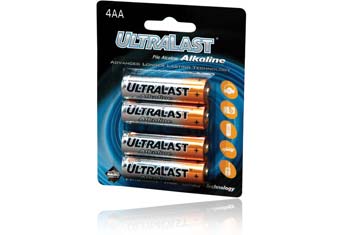
Of course, any good severe weather preparedness kit would contain a variety of alkaline batteries (the items we've featured so far in this post require AA batteries almost exclusively).  


However, in today's modern technological world, simple alkaline batteries won't always do the trick.  If your house is like mine and mainly relies on cellular phones (and/or smart phones) for communication, you'll want to be sure to have a backup battery charging source for these devices as well:


Enercell Portable Power Bank  $49.99 at RadioShack (and other retailers - search online at Amazon and other sources for possible lower prices if you have time to order one and have it shipped):


Before the storm hits, just plug this unit into the USB port of any computer and charge it up.  If the power goes out later on and the battery runs down on your cellphone, smartphone or similar device, just plug it into the Enercell for up to an additional 8 hours of talk time (depending on usage).

Package includes a USB-to-mini USB cable, a mini USB-to-micro USB tip and an Apple cable to fit the vast majority of devices out there today.

Another excellent emergency power source to have on hand (I have 2 of them) is the Enercell Power Inverter, ($39.99 regular price at RadioShack) or similar item:


You simply plug this item into the cigarette lighter of your vehicle (make sure the tank is full before the storm hits, and obviously keep the garage door open when running the car!) and you can then plug in any AC or USB power cord to provide power.  As long as you have gas in the tank, you can continuously charge (or directly provide power to) any compatible item (such as your laptop computer, cellphones, etc.).


(4).  Basic first aid kit:


Basic first aid kits are available for $15-20 at most big box retail stores, drugstores, or online.  A first aid kit can be as simple or elaborate as you choose, but make sure it includes the basics to get you by in case of an injury sustained during a severe weather event.  

Most pre-made kits include a variety of bandages, sterile wipes, and even pain relievers.  You can also put together a kit on your own for about $10.  Don't forget a small supply of emergency insulin if there's a diabetic in the house!


(5).  Emergency food & water supply:


It's also not a bad idea to have a case or two of bottled water and some non-perishable food items such as granola bars, fruit snacks or mixed nuts, etc., on hand just in case the power goes out for an extended period of time and you are unable to save perishable items.  If the grocery store is out of power too, it might be awhile before you can get back and restock.

If you have a propane powered hot plate and plan to warm up some canned soup, don't forget to have an "old school" manual can opener on hand!

You can also find prepackaged Emergency Food & Water Kits if you don't want to make one up on your own.  Many of these also include a first aid kit as well.


A severe weather preparedness kit can be as elaborate or as simple as you wish to make it.  Regardless of the type you choose to put together, try to make sure and include the above items so that you're ready to handle the next severe weather event that strikes your area.


If you enjoy reading 'The Original Weather Blog', please be sure to "like" our facebook page!